


Osteochondrosis is a chronic disease of cartilage tissue in which degenerative-dystrophic processes predominate.The disease can affect any joint in the body, but most cases occur in the intervertebral discs.Depending on the location, osteochondrosis of the cervical, thoracic and lumbar spine is distinguished.The peak incidence is observed at 30-40 years of age, but recently this disease is becoming younger and occurs even in adolescents.Symptoms similar to osteochondrosis occur in 50-90% of the population.In the article you will find the key symptoms of thoracic osteochondrosis and methods of treating this disease.
Specifics of osteochondrosis of the thoracic region
Osteochondrosis of the thoracic spine is less common than other types.The anatomy of the thoracic spine includes more discs than the lower back and neck combined.However, these discs are inferior in size and thickness.Due to the redistribution of the load on the ribs and sternum, this part of the spine is less mobile.
While for intervertebral osteochondrosis of the lumbar region a more characteristic symptom is pain after excessive and improper physical activity, for the thoracic region pain is practically not typical.Most often, symptoms of complications of various diseases of the cardiovascular system or respiratory system are observed.
Reasons for development
The most common cause of osteochondrosis is a sedentary lifestyle.Nowadays, people increasingly have to work at a computer in the most uncomfortable positions for their backs.Also, lack of physical activity affects the condition of the muscles on which the condition of the intervertebral discs depends.Not only physical inactivity, but also excessive physical activity can cause osteochondrosis of the thoracic spine; the following risk factors are also identified:
- heredity;
- various forms of spinal curvature, such as scoliosis, posture disorders;
- sedentary lifestyle, sedentary work;
- excessive physical activity or sudden cessation of active sports;
- spinal injuries;
- bad habits, chronic stress, insomnia;
- overweight, obesity;
- flat feet, prolonged wearing of uncomfortable shoes;
- dystrophic changes associated with the normal aging process of the body.
Recently, there has been a trend towards rejuvenation of the disease.Symptoms of osteochondrosis are diagnosed starting in adolescence.There is a hypothesis that this is due to the large amount of time spent at the computer.
Symptoms
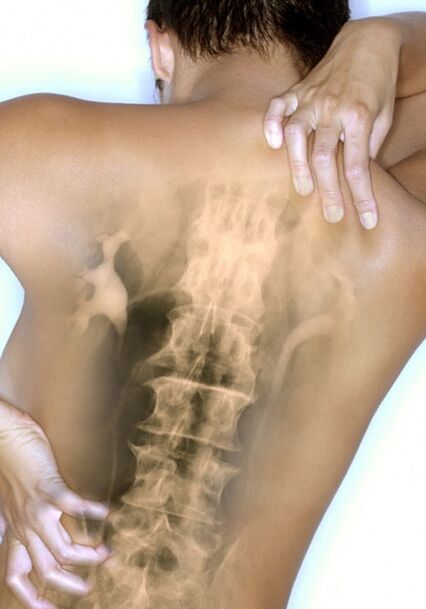
The clinical picture of osteochondrosis of the thoracic spine is quite clear, but can be hidden under other diseases or their complications: attacks can often resemble myocardial infarction, cholecystitis, pancreatitis, or renal colic.Among the most common are:
- the occurrence of acute pain after a long stay in one position, most often uncomfortable.These pains also appear in response to sudden movements or due to lifting heavy weights;
- There may be not pain, but a feeling of tightness in the chest or back.Difficulty breathing, pain on deep inspiration or exhalation;
- due to damage by osteochondrosis to the nerve roots emerging from the spinal canal, numbness or a tingling sensation may be observed in certain areas of the body;
- there is also a dull pain in or between the shoulder blades, as well as in the shoulder girdle and sternoclavicular joint;
- coldness of the lower extremities due to complications of blood supply.
Some general, nonspecific symptoms may occur:
- frequent attacks of intercostal neuralgia;
- from the gastrointestinal tract: nausea, heartburn, bloating, flatulence, constipation or diarrhea.Abdominal pain may occur due to damage to the lower segment of the thoracic spine;
- peeling skin, thin and brittle nails and hair;
- disorders of the reproductive system.
Often symptoms manifest themselves in the form of vertebral syndromes: dorsago and dorsalgia.These are the main markers of the disease, which often indicate osteochondrosis of this department with 100% probability.
Dorsago
Characterized by sudden sharp pain in the thoracic spine.Patients associate it with “dagger” pain, because in most cases it is acute and unbearable.Most often, the cause of this type of pain is a long sitting position or prolonged uncomfortable posture.When trying to stand up or take a more comfortable position, a person experiences acute pain, or “lumbago,” which can also cause movement restrictions for some time.
Dorsalgia
This type of pain has a gradual onset with a cumulative effect and can develop over 2-3 weeks.With dorsalgia, nagging pain or discomfort is observed in the localization of a specific damaged area of the spine.When changing the position of the body or deep breathing, the pain increases sharply.There is a tendency for pain to intensify in the evening or after physical activity.In the morning, patients usually note a weakening or even complete disappearance of pain.A short walk on foot also helps.
Diagnostics
Making a diagnosis for any pathology begins with a comprehensive examination of the person and analysis of his complaints about his condition.For example, in advanced stages, there is often a curvature of the spine, noticeable from the outside.On the contrary, if posture is impaired, it should be carefully examined for the presence of osteochondrosis.It is recommended to carefully analyze the patient’s hereditary prerequisites for the development of this pathology.It is necessary to refer the patient to undergo general blood and urine tests.
One of the most necessary stages is radiography of the thoracic spine in various projections, with the help of which it is necessary to analyze osteophytes, their presence and size;assess the height of the disks and the presence of changes in it;size and position of hernias.
Another X-ray method is discography, which uses a contrast agent.This allows you to assess the condition of the nucleus pulposus.Computed tomography can also be used, but due to the high radiation exposure of patients, it is used in exceptional cases.
Electrocardiography is a mandatory examination method.Symptoms of osteochondrosis of the thoracic spine are extremely similar to the symptoms of myocardial infarction and angina pectoris.
Treatment
To successfully treat spinal osteochondrosis, it is necessary to influence the cause of the disease, and not limit yourself to painkillers alone or immediately send for surgery.For example, patients with low mobility will receive completely different treatment methods compared to a patient with a history of spinal injury and its complications.It is also extremely effective to combine therapy methods to enhance and consolidate the effect.
Medication
In the acute period of the disease, in addition to medications, strict bed rest is recommended.The main groups of drugs for breast osteochondrosis:
- analgesics for the relief of acute pain;
- for some patients, the use of antispasmodics is recommended;
- B complex vitamins;
- chondroprotectors, which require individual selection for each patient, taking into account the characteristics of the development of the disease, as well as taking into account the specifics of the development of the body.
Drug therapy is effective only in the early stages of the disease.In addition, in the chronic form of osteochondrosis, medication can be prescribed for life or until complete recovery.
Exercise therapy
Exercise therapy is therapeutic physical culture.Today there are a lot of useful exercises for the prevention and treatment of osteochondrosis of the thoracic region.These include breathing exercises too.
The basis of exercise therapy for osteochondrosis of the thoracic region is the plank.You should start it with a minimum time, increasing it daily to the minimum level.The goal is 1.5 minutes.Also in this position, it is recommended to alternately press your knees to your chest, holding this position for 5-10 seconds.It will also be useful to try hanging on the horizontal bar with the same gradual increase in time.
The exercise therapy method is used outside the acute period of the disease and is one of the most universal methods that can be combined with others.
Manual therapy
A manual method of influencing the musculoskeletal system to relieve both chronic and acute pain in the joints and spine.It also helps to increase range of motion in joints and corrects postural disorders.Also used to relieve muscle tension.
Manual therapy also helps to improve blood circulation in the intervertebral discs and enhance the transport of oxygen from the blood to the tissue and vice versa.In this way, it is possible to eliminate complications of osteochondrosis associated with damage or compression of blood vessels, as well as a lack of oxygen in tissues and organs.
Traditional methods
The advantage of traditional medicine is that its effect has been tested for many years.There are many different ways to treat any illness at home without the risk of side effects.Recipes for infusions used for illness:
- Calendula.Take 100 g of product per 200 ml of regular men's cologne.Add some camphor oil.Leave in a cool, dark place to infuse for two weeks in a tightly closed bottle;
- Dandelion.Take dandelion roots, mint leaves, birch buds and coriander fruit, 2 tbsp each.l.and pour 0.5 cups of boiling water.Cook over low heat for 2-3 minutes, stirring constantly.After this, add 60-70 g of butter and cook for another 20 minutes, and then cool.
It is extremely important to rub these decoctions strictly into the affected area of the chest.Rubbing should be done with soft massage movements for 5 minutes.Then insulate the rubbing area, for example, with a sweater.All decoctions are stored in the refrigerator.
Some herbs are not approved for use in the presence of certain diseases, so it is better to consult a specialist.
First aid for exacerbation
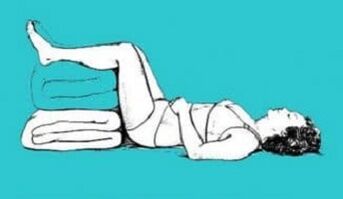
First of all, it is necessary to warm the painful area.But you should only do this with medicinal ointments; you should not use decoctions: there is a chance of getting a skin burn.
It is better to do this with a light warming fabric, for example, a woolen product.Then it is recommended to lie down on a hard surface to correct the uneven body position.In a pinch, even the floor will do.In case of exacerbation of osteochondrosis of the thoracic region, apply a tight bandage to the chest.
During an attack, it is advisable to take a painkiller, preferably intramuscularly.NSAIDs are used for acute attacks.
If there is no improvement in your well-being within 30-60 minutes, then you must call an ambulance and be sure to inform them upon arrival about the pain medication.
Prevention
Prevention is the simplest and least expensive way to maintain health.Every person exposes himself to many negative environmental factors every day.If this impact is minimized, then the chance of developing osteochondrosis is reduced to zero.Basic principles for the prevention of thoracic osteochondrosis:
- Lead an active lifestyle.It's easy to overdo it and put even more stress on your spine.It is better to listen to the needs of the body, start with minimal loads and gradually get used to it.Morning jogging and swimming pools are most optimal for this.
- Monitor prolonged sitting in one position.It is better to regularly stretch the joints of the upper shoulder girdle, try to maintain correct posture, and relax your shoulders.
- You shouldn't skimp on a chair for sitting work.Let it be a special chair that supports the spine well.
- Use orthopedic mattresses and pillows.It is during sleep that the spine most often becomes deformed, remains in a curved position for a long time, and then disappoints with pain and discomfort throughout the day.These are the initial prerequisites for osteochondrosis.It’s better to warn them anyway.
- Avoid carrying heavy objects.Unfortunately, sometimes this is vital.In this case, it is better to ensure an even distribution of weight relative to the body.And try to do everything smoothly, without sudden movements.Otherwise, this may threaten not only osteochondrosis.
- Wear comfortable shoes.In everyday life, heels will only bring health problems.It's better to put them aside for an evening look.
- Strengthen muscles.Abs, lower back, back and spinal muscles.This is the main framework for a healthy back and correct posture.
We must not forget about proper nutrition.The daily menu must meet the needs of the individual body and include the maximum amount of vitamins, micro- and macroelements.
Conclusions
- Osteochondrosis of the thoracic region is a dystrophic-degenerative disease in which deformation and loss of functionality of the vertebral discs occur.
- Thoracic osteochondrosis is less common than other types of this pathology.Recently, the disease has been diagnosed not only in older people, but also in adolescents.
- There are many factors in the development of the disease.As a rule, osteochondrosis starts due to several reasons.
- Monotherapy is rarely effective.To eliminate the cause and symptoms of the disease, treatment tactics are developed, which includes taking medications, exercise therapy and other auxiliary procedures.
- Simple prevention can reduce the development of breast osteochondrosis to a minimum.